Table of Contents
- What Small Group Personal Training Actually Is
- The Core Benefits of Small Group Personal Training
- Small Group Training vs Personal Training: Which Fits You?
- Small Group Personal Training for Beginners
- How Often to Do Small Group Personal Training
- Small Group Training Exercises You Can Expect
- Who Small Group Personal Training Is Not For
- How to Evaluate a Small Group Program Before You Join
- Frequently Asked Questions
Last Updated: October 17, 2026
What Small Group Personal Training Actually Is
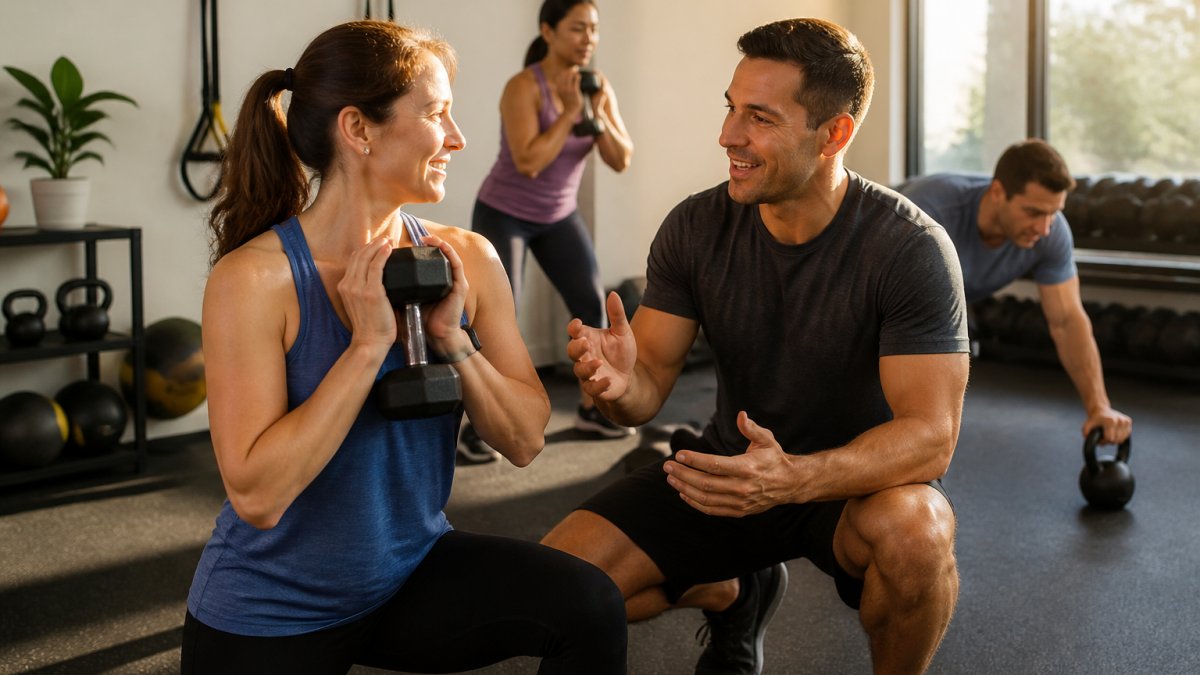
Small group personal training is a coached strength and movement session for a handful of people at once, where everyone follows the same coached workout, with modifications for each person. It sits between a crowded group fitness class and a one-on-one session.
The distinction matters more than most people realize. A group class follows one routine for everyone in the room. Small group personal training keeps the coaching relationship intact while spreading the coach’s time across a few people.
Group Size and Coach-to-Client Ratio
Group size is the number that decides whether a program is truly personalized. A workable small group caps out around four to six people per coach. Above that, the coach-to-client ratio gets thin and form correction turns into crowd control.
Ask for the ratio in writing before you commit. If a provider can’t tell you the maximum number of people in a session, that’s your answer.
The Core Benefits of Small Group Personal Training
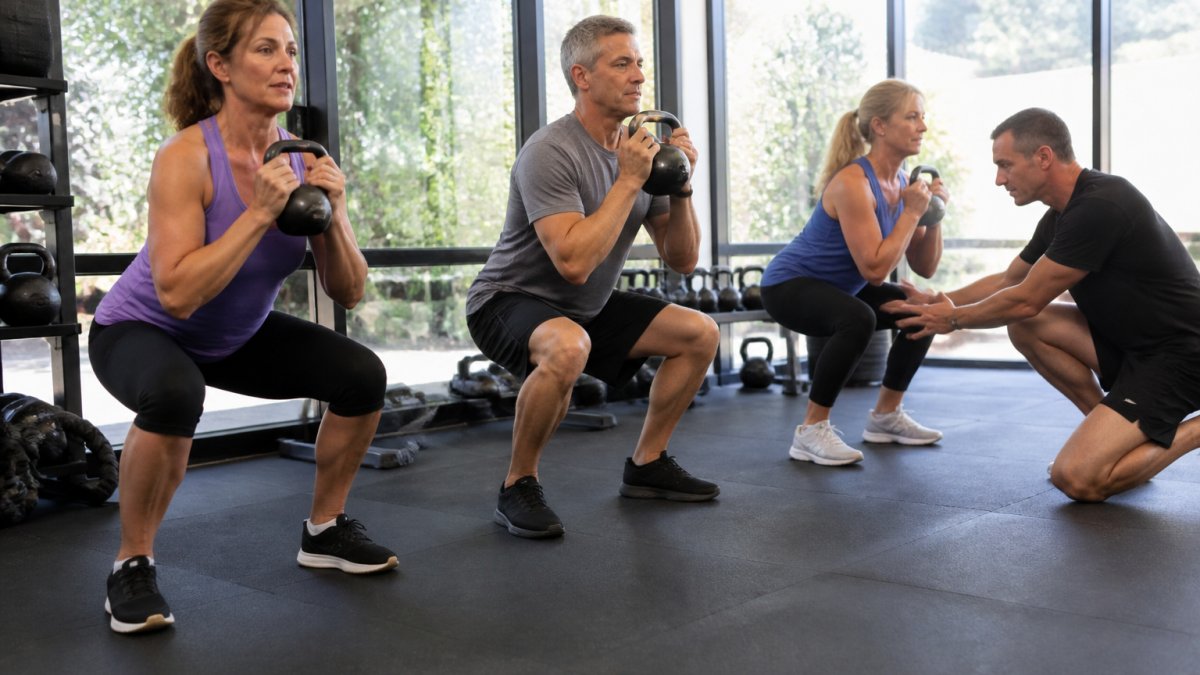
The benefits stack up in a specific order: coaching quality first, then accountability, then cost. Most articles lead with price. We’d argue the coaching is what you’re actually buying, and the savings are a bonus.
Personalized Coaching and Individualized Feedback
Personalized coaching means the workout is scaled to your body, not the room’s average. That shows up in exercise selection, load, and range of motion.
A good coach watches your movement and adjusts in real time. If your lower back rounds on a deadlift, you get a cue and a modification before the next rep. In a large class, that correction never happens.
Exercise modifications matter most for people returning after time off or managing old injuries. A coach can swap a movement for one that fits your body today, then progress you back over weeks.
Accountability, Motivation, and Community
Accountability is the quiet engine behind consistency. When a coach expects you at a set time and two other people are training beside you, skipping feels different than skipping a solo gym visit.
Motivation works the same way. Training alongside others adds a social pull that a treadmill doesn’t offer. Many busy adults find that the community aspect is what keeps them showing up in month four, when the initial enthusiasm has worn off.
Small Group Training vs Personal Training: Which Fits You?
Small group training vs personal training comes down to how much individual attention you need and how you want to balance attention with per-session value. One-to-one training gives you the coach’s full attention for the entire session. Small group training splits that attention but keeps the personalization.
| Factor | One-to-One Training | Small Group Personal Training |
|---|---|---|
| Coach attention | Full session | Shared among a few clients |
| Relative cost per session | Highest | Lower than one-to-one |
| Program design | Fully individual | Individual within a shared session |
| Motivation source | Coach-driven | Coach plus training partners |
| Best for | Complex needs, early rehab, first weeks | Established clients who want structure and community |
How to Think About Cost Without Guessing
Most studios do not publish prices, and that makes comparison hard. Instead of chasing a number, ask what the session includes and how the studio structures commitments. A one-to-one session typically carries the highest per-session cost because the coach’s full attention is dedicated to one person. Small group training lowers the per-session cost by sharing the coach across a few clients.
The better question is not which format is cheapest. It is which format gives you the coaching you need at a commitment you can sustain. A lower-cost option you stop attending is more expensive than a higher-cost option you use consistently.
When the Answer Changes Over Time
Here is the part most guides miss: the right answer can change over time. Plenty of people start with one-to-one sessions to build technique and confidence, then move into a small group once the basics are solid. Others use one-to-one sessions as a periodic check-in while training in a small group most weeks.
If you are weighing the two, ask whether the program offers a movement assessment before your first session and how it tracks progress. Those answers matter more than the format label.
The best format is the one that keeps you showing up. Match the coaching level to your needs now, and plan to revisit the choice as your confidence grows.
If you are in the Orlando area and want help deciding, Core & More Fitness offers 30- and 55-minute personal training, partner and couples training, and small group sessions. Request a fitness consultation and we will help you choose the starting point that fits your goals.
Small Group Personal Training for Beginners
Small group personal training for beginners works well when the coach can scale every movement to your starting point. The catch is that a beginner needs more form correction, not less. That is why the first few weeks matter more than the format itself.
A beginner-friendly small group should include a movement assessment before the first real workout. The coach should ask about your history, watch you squat, hinge, push, pull, and carry, and then build a starting point from what you can do today. If a program skips that step, you are guessing.
When Personal Training Is the Better Starting Point
For someone brand new to strength work, a few one-to-one sessions are often the better starting point. One-to-one coaching lets the coach teach the core patterns, set a baseline, and answer questions without splitting attention. That foundation makes a small group more productive later, because you already know what a good rep feels like.
A common pattern is to start with one-to-one sessions for technique and confidence, then move into a small group once the basics are solid. The right timeline varies. Some people are ready after a handful of sessions; others prefer more one-to-one time before sharing the coach.
What a Good Beginner Session Looks Like
A well-run beginner session in a small group should feel controlled, not chaotic. Expect a warm-up that primes hips and shoulders, a squat or hinge pattern at a load you can control, a push and a pull scaled to your level, a loaded carry or core stability drill, and a short cool-down. The coach should adjust load and range of motion for each person in the room.
Beginners should also expect clear instructions on what to do between sessions. A good coach gives you a simple way to stay active on your own without overwhelming you.
Ask the coach what happens on day one. A program built for beginners will include an assessment, a conversation about your history, and a scaled first workout, not a trial by fire.
Questions Beginners Should Ask
Before joining a small group as a beginner, ask how the coach handles different fitness levels in the same session, how progress is tracked, and what happens if a movement does not feel right. You should also ask whether the coach has experience working with adults over 40 who are returning to exercise.
If you are in the Orlando area and unsure where to start, a fitness consultation can help you decide whether one-to-one training or a small group is the better first step.
How Often to Do Small Group Personal Training
How often to do small group personal training depends on your goals and recovery, but two sessions per week is a common starting rhythm for busy adults. That frequency supports strength gains without overwhelming a schedule or a body that’s still adapting.
Three sessions per week suits people chasing faster progress who recover well between workouts. One session per week works as a maintenance anchor when life gets crowded.
Consistency beats intensity here. Two sessions you actually attend will out-perform four you keep canceling. If your schedule shifts week to week, ask how the studio handles rescheduling before you sign anything.
Small Group Training Exercises You Can Expect
Small group training exercises center on compound movements that carry over into daily life: squats, hinges, pushes, pulls, and carries. A core-first studio will also build in stability work, since core endurance supports posture and lifting mechanics.
A typical session might include:
- A warm-up that primes hips and shoulders
- A squat or hinge pattern at your working weight
- A push and a pull, scaled to your level
- A loaded carry or core stability drill
- A short cool-down with breathing work
Workout variety comes from rotating exercise selection and adjusting load, not from random novelty. Progressive overload is what drives results, and a good coach tracks it session to session.
The most common mistake in small group settings is chasing variety for its own sake. If every session looks completely different, nobody is tracking whether you’re actually getting stronger.
Who Small Group Personal Training Is Not For
Small group personal training is not the right fit for everyone, and saying so is more useful than pretending otherwise. If you need hands-on attention for a specific injury, a one-to-one arrangement usually serves you better at the start.
It’s also a poor fit if you want full control over every minute of your session, or if you’d rather train completely alone. And if a provider can’t tell you the group cap, walk away.
The American College of Sports Medicine publishes guidance on exercise screening and progression that a reputable coach should be following. Ask about it.
How to Evaluate a Small Group Program Before You Join
Evaluate a program by asking five questions before you pay anything. The answers tell you more than any tour of the equipment.
- What is the maximum group size, and what’s the coach-to-client ratio?
- Does the first session include a movement assessment?
- How are programs individualized within a shared session?
- How does the coach track progress over time?
- What’s the rescheduling policy if my week changes?
Progress tracking deserves special attention. Core & More Fitness offers Fit3D body composition scans for members, which gives you a baseline and a way to see change beyond how you feel.
The CDC’s physical activity guidance is a useful benchmark for how much strength and aerobic work adults should target each week. A good program helps you hit those marks without guesswork.
Finding a training format that fits your body, your schedule, and your confidence level takes some honest questions.
Frequently Asked Questions
Is 30 minutes with a personal trainer enough to see results?
Thirty minutes is enough when the session is structured and focused. A well-planned half hour removes the idle time that stretches longer workouts, so you move through warm-up, strength work, and core training with little rest between sets. Frequency and consistency matter more than session length. Two to three focused 30-minute sessions per week, done week after week, give you a steady base to build on. Ask any studio how they structure a session before you commit.
How is small group personal training different from a group fitness class?
In a group fitness class, everyone follows the same routine and the instructor watches the room. Small group personal training keeps the group small enough that a coach can correct your form, adjust the load, and change an exercise for your body. You still get programming built around goals, plus the accountability of a scheduled session with a coach who tracks your progress. The trade-off is a higher per-person cost than a drop-in class.
Is small group personal training suitable for beginners?
It can be, provided the group is small and the coach screens you first. Beginners benefit from learning exercise technique correctly from the start, and a coach can scale movements to your current fitness level. That said, if you are returning from an injury, have significant mobility limits, or feel anxious about keeping up, one-on-one personal training is often the better starting point. Many people do a few private sessions, then move into a small group.
When is one-on-one personal training a better choice than small group training?
Choose one-on-one when you need undivided attention: rehabbing after an injury, learning complex lifts from scratch, working around a specific limitation, or preferring privacy. One-on-one also suits people whose schedules change weekly, since a single appointment is easier to move than a shared session. Small group training works well once you have a base and want accountability plus lower cost per session. Many people combine both.